Why Is Hijab Required for Muslim Women?
For many Muslim women in the UK and USA, the question of hijab is not simply about clothing — it is a question about faith, obedience, and identity.
Why does Islam require hijab? What does the Quran actually say about it? And what should a Muslim woman's hijab look like?
In Islam, hijab is understood as an act of worship and obedience to Allah. Its obligation is established through the Quran, the Sunnah, and the established scholarship of Islam.
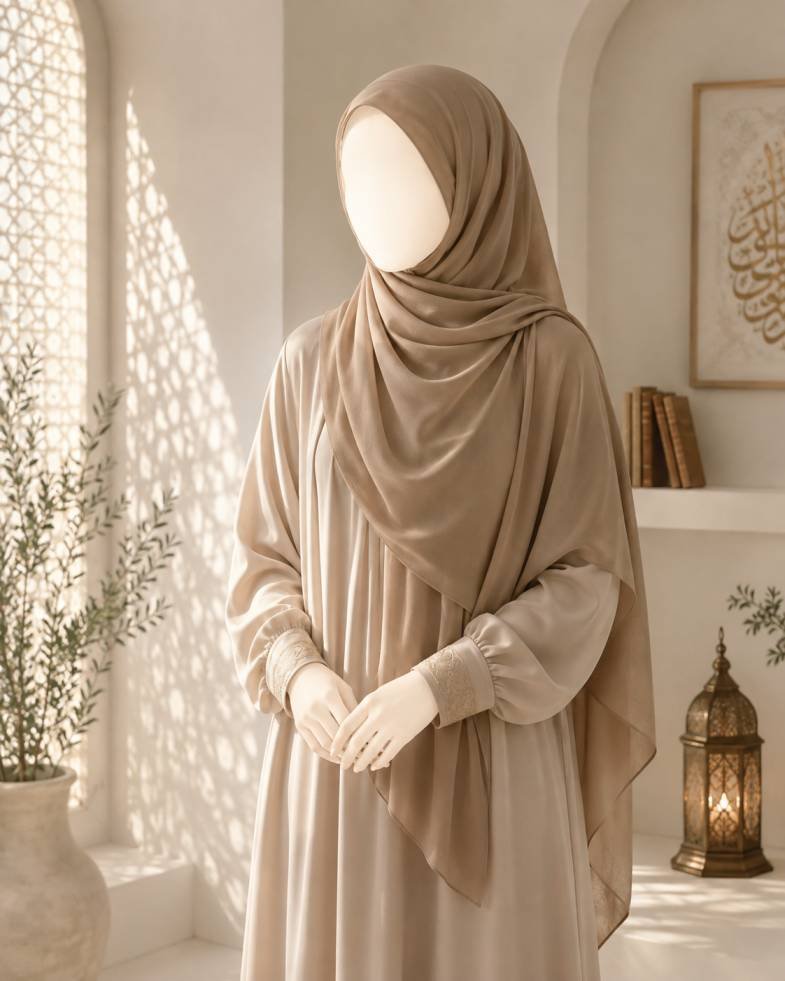
Hijab is regarded by the majority of Islamic scholars as an obligation for Muslim women after puberty. It requires covering the hair and body — while the face and hands may remain uncovered — with clothing that is opaque, loose, and modest. Its foundation is the Quran (Surah An-Nur 24:31 and Surah Al-Ahzab 33:59), the Sunnah, and the consensus of classical scholarship.
What Does Hijab Mean in Islam?
In Islam, hijab means covering, protection, and separation. In the context of Islamic dress, it refers to the modesty a Muslim woman observes in her clothing and appearance when she is in the presence of men whom she could potentially marry — known as non-mahram men.
Hijab is therefore more than simply wearing a headscarf. Islamic modesty also includes appropriate clothing, covering the body, and maintaining dignified behavior and interaction. For Muslim women, observing hijab after reaching puberty is traditionally understood as an obligation of Islamic practice, just as other religious duties are followed by believers.
Who is a woman not required to cover her hair in front of?
A woman does not need to observe hijab before her mahram relatives — those she can never marry — such as her father, grandfather, husband, sons, brothers, uncles, and father-in-law. Hijab is observed in front of non-mahram men outside this circle.
What Does the Quran Say About Hijab?
The obligation of modest dress is supported directly by two verses of the Quran. Together with the Sunnah, they form the primary evidence that classical scholarship used to establish the ruling of hijab.
Surah An-Nur (24:31)
In Surah An-Nur, verse 31, Allah instructs believing women to guard their modesty and to draw their coverings over their chests. The verse establishes an important principle of modest dress and instructs believing women regarding how they should present themselves.
Classical Islamic scholarship understood this verse, together with other evidence, as establishing the obligation of covering the body. The commonly cited position among the major schools is that the face and hands may remain uncovered, although there are additional scholarly discussions concerning the face.
Surah Al-Ahzab (33:59)
Allah also says in Surah Al-Ahzab, verse 59, that the Prophet ﷺ should tell his wives, daughters, and the women of the believers to draw their outer garments over themselves. This verse provides another direct Quranic basis for Islamic modest dress and demonstrates that the command was addressed not only to the Prophet's household but also to believing women generally.
Read next
Building a stronger connection with the Quran often begins with learning to recite it correctly. See our guide on how to read Quran with Tajweed.
Why Do Muslim Women Wear Hijab? The Wisdom Behind It
The obligation of hijab comes from Allah, while scholars have also explained several wisdoms behind it. The command should not be reduced to a single explanation — its foundation is obedience to Allah, while its wisdom can be understood through the broader Islamic teachings on modesty and dignity.
- Obedience to Allah: a woman wears it first and foremost as an act of worship.
- Modesty: it reflects the Islamic value of haya' and dignified conduct.
- Privacy and dignity: Islamic teachings encourage believers to maintain boundaries around their bodies and personal appearance.
- Identity: for many Muslim women, hijab is also a visible expression of their faith.
What Does a Proper Hijab Look Like?
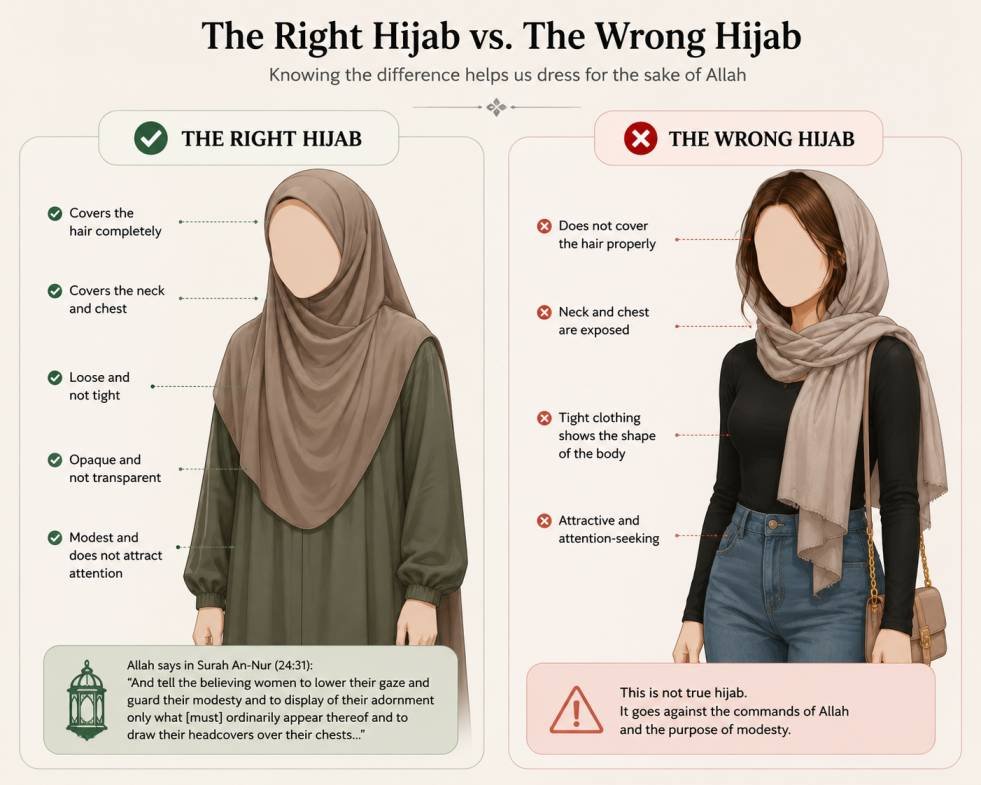
A properly observed hijab is not simply a scarf placed over the hair. Islamic modest dress traditionally requires clothing that provides adequate coverage and maintains modesty. Generally, the clothing should meet four conditions.
A Muslim woman can therefore observe hijab while still dressing neatly, beautifully, and appropriately. Modesty does not mean that a woman must stop caring about her appearance.
Hijab vs Niqab: What's the Difference?
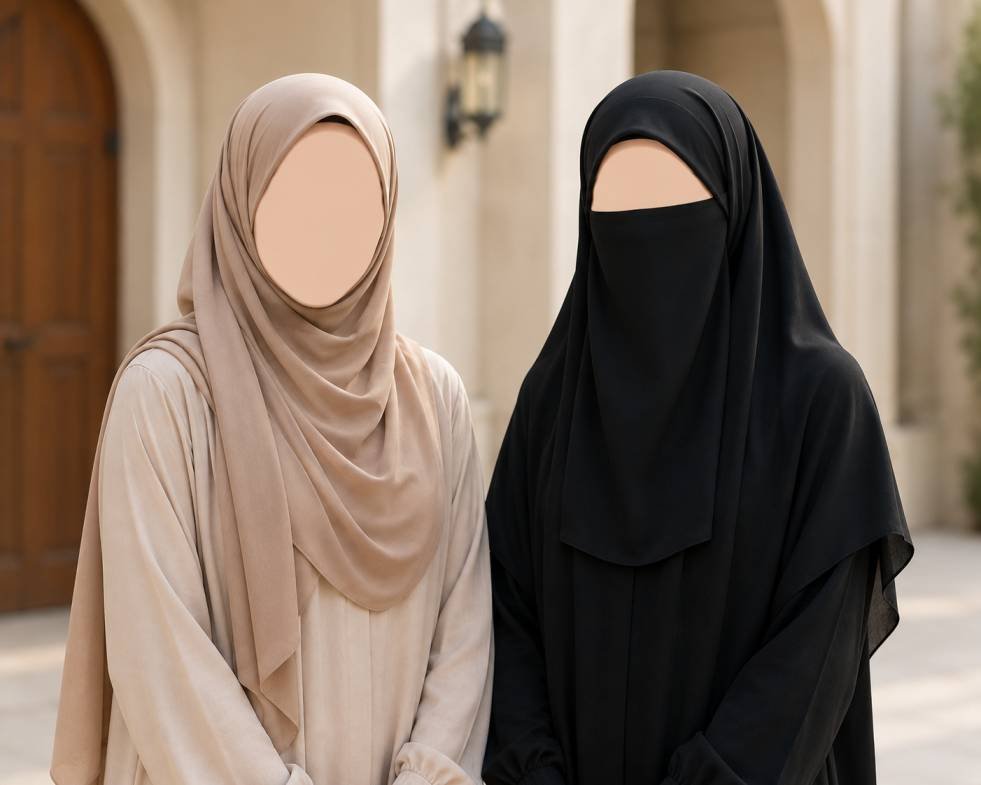
Hijab and niqab are two different forms of Islamic dress. Understanding the distinction helps a Muslim woman know exactly what is required of her and what is an additional, personal choice.
Hijab is the required form of modest covering for Muslim women after puberty. It includes covering the hair, neck, and body with modest, loose, and non-transparent clothing.
Niqab, on the other hand, is a face covering. It is not the same obligation as hijab and is not required of every Muslim woman. Whether a woman chooses to wear niqab may depend on her personal choice, family and community traditions, or the customs of the society in which she lives.
A Muslim woman should therefore distinguish between the obligation of hijab and the optional practice of niqab. Wearing niqab can be a personal expression of modesty and religious commitment, but a woman who observes the required hijab without covering her face is still observing hijab. Niqab is an additional choice, not a condition for a woman to be considered as wearing hijab.
Beginning Your Hijab Journey
Hijab is ultimately about a Muslim woman's relationship with Allah. Its obligation is grounded in the Quran and Sunnah and supported by the established Islamic scholarly tradition.
Understanding the ruling is only the first step. For many women, beginning or maintaining hijab is a personal journey that requires faith, patience, and sincerity. The purpose is not simply to wear a piece of fabric — it is to respond to Allah's guidance with humility and obedience, while striving to live with modesty, dignity, and faith.
Learn with a Female Quran Teacher
If you would like a supportive female Quran teacher to guide you through your Islamic learning journey, Zaid Academy offers gentle, one-on-one lessons with Al-Azhar-certified teachers.
Get Your Free Trial →Frequently Asked Questions About Hijab
Is hijab compulsory in Islam?
According to the majority of Islamic scholars, hijab is obligatory for Muslim women after puberty. The obligation is established through the Quran (Surah An-Nur 24:31 and Surah Al-Ahzab 33:59), the Sunnah, and the established scholarship of Islam.
At what age does hijab become obligatory?
Observing hijab is traditionally understood to become an obligation once a Muslim woman reaches puberty, just as other religious obligations begin at that stage of life.
What parts of the body must be covered?
The commonly cited position among the major schools of thought is that a woman covers her whole body while the face and hands may remain uncovered. The clothing itself should be opaque, loose, and modest.
Is niqab required in Islam?
No. Niqab, a face covering, is not the same obligation as hijab and is not required of every Muslim woman. A woman who observes the required hijab without covering her face is still observing hijab. Niqab is an additional, personal choice.
Can a woman be a good Muslim without wearing hijab?
A woman who does not wear hijab is still a Muslim and can perform many other good deeds, but according to mainstream scholarship she would be leaving a required obligation. For many women, beginning hijab is a gradual and personal journey that grows with faith and sincerity.
Is hijab cultural or religious?
Hijab is primarily a religious obligation grounded in the Quran and Sunnah. Culture may influence the color and style of how it is worn, but the requirement of modest covering itself comes from Islamic teachings, not custom.