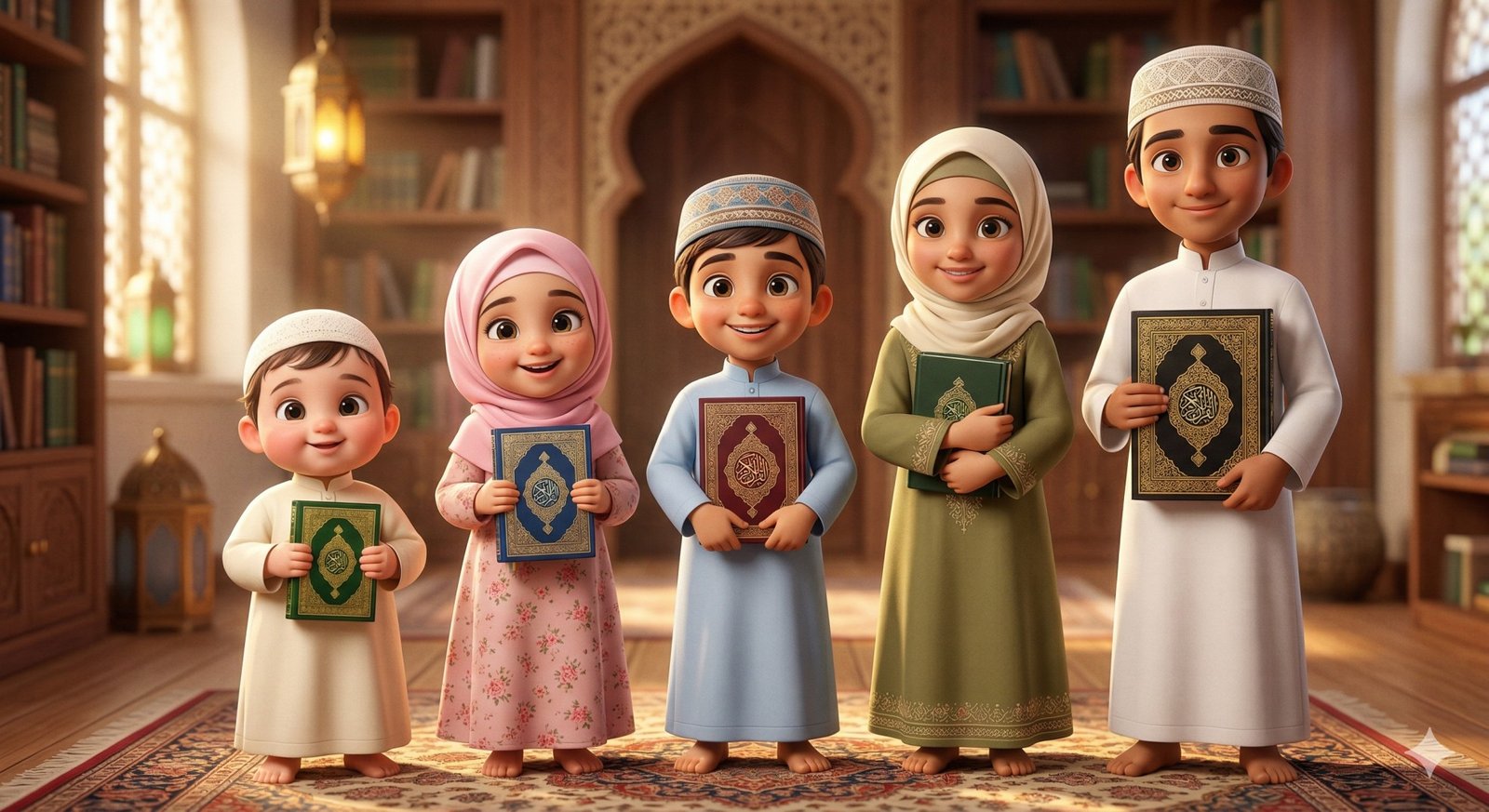
The best age to start Quran classes is between 5 and 7 years old. However, children can be gently exposed to Quran recitation from birth, and many are ready for structured learning as early as age 4 if they show signs of readiness — such as a 15-minute attention span, clear communication, and curiosity about Arabic sounds. There is no age too late to begin.
She messaged us on a quiet Tuesday evening. A Muslim mother living in Europe, her daughter was four and a half years old. "Is she too young?" she asked. "Am I too early — or am I already late?"
If you have ever found yourself asking the same question, this guide is written for you. We will cover the Islamic tradition, the science of readiness, what you as a parent can do right now — and what to do if you feel you have already missed the window. Spoiler: you have not.
What Islam says about the best age
The Prophet ﷺ said: "Teach your children prayer when they are seven years old." Many scholars extend this wisdom to Quran learning — age 7 is when formal religious education traditionally begins.
Yet the beloved Arabic saying «التعلُّم في الصِّغَر كالنَّقش على الحجر» — learning in childhood is like engraving on stone — tells us that preparation starts long before the classroom.
This does not mean you must wait until age 7. It means the journey begins much earlier than most parents realise — and it begins at home, with you.
The age-stage roadmap
Every child develops differently, but Islamic teaching and modern child development research align closely on these learning stages. Use this as your guide, not a rigid rule:
Quran is our children's guide through life — they have to learn it in the right way.— Teacher Alaa, Al-Azhar certified Quran tutor, Zaid Academy
The right way is not always the fastest way. It is the way that builds a relationship between your child and the Quran that lasts a lifetime.
What if I missed the best age?
This is the question most parents are afraid to ask — and it may be the most important one in this guide.
Meet Maryam. A teenage girl living abroad with her family, she was 13 years old when her mother reached out to us. Maryam was struggling — pushing back against her faith, against her father, against everything Islamic. Her mother had tried everything. She enrolled Maryam in Islamic Studies at Zaid Academy almost as a last hope.
The first session, Maryam ignored the tutor completely. In the second, when the tutor asked gently why she was not engaging, Maryam screamed:
"I don't want to be a Muslim."
The tutor ended the session calmly. And came back the next one with a big smile.
She did not mention Islam. Instead, she asked Maryam about her favourite book. Her friends. Her life. She gave Maryam a simple fiction novel to read and discuss together.
Day by day, session by session, something shifted. Maryam and her tutor became close — laughing, talking, truly connecting. And then, one afternoon, Maryam said something her tutor never expected:
"I want to recite Quran."
Two years later, Maryam completed the recitation of the entire Quran. بارك الله فيها.
This is a true story from one of our students. At Zaid Academy, we believe the tutor is a member of the family — and their mission is to be the right guide for your child, wherever they are.
The answer to "what if I missed the best age?" is this: you have not. The Quran has no expiry date. What your child needs is not the perfect age — it is the right teacher, the right approach, and a parent who did not give up. That parent is you.
5 signs your child is ready
Age is a guide, not a rule. Before enrolling, look for these signs in your child:
Quran Readiness Checklist for Parents
If your child shows three or more of these signs — even at age 4 — they may be ready. If fewer, do not wait doing nothing. Use the time to build the environment at home first.
The parent's role before — and during — classes
This is the section most guides skip. The tutor teaches for 30 minutes. You are there for the other 23 and a half hours. Your role is irreplaceable.
Make Quran part of the home
Play gentle recitations during meals, bedtime, and morning routines — familiarity builds love
Speak with joy, not obligation
«بارك الله فيك، you recited so beautifully today» — your tone shapes their relationship with the Quran
Read Islamic stories together
Even picture books of the Prophets build the emotional connection before formal letters begin
Celebrate every small win
A new letter, a full surah, any milestone — warmth is more powerful than prizes or pressure
For a deeper understanding of why this approach works, read why Muslim parents across the UK are choosing online Quran classes. For home learning ideas, explore our Islamic homeschooling curriculum guide.
Memorisation or recitation first?
This is the most common question we receive from new parents. The honest answer is almost always the same:
| Recitation — Tajweed ✦ Start here | Memorisation — Hifz | |
|---|---|---|
| Best starting age | 4 – 6 years | 6 – 8 years (after basic reading) |
| Prerequisite | None — begin with Noorani Qaida | Confident Arabic reading first |
| Time to see results | 3 – 6 months | 1 – 3 years for Juz Amma |
| Risk of starting too early | Very low | Can lead to hollow memorisation |
| Our recommendation | ✦ Always start here | Add when reading is confident |
A child who can read Arabic correctly will memorise far more effectively — and far more meaningfully — than one who memorises sounds they cannot read. Start with recitation. The Hifz will follow naturally, in sha'Allah.
Our Quran Recitation and Tajweed Course for Kids is designed precisely for this first step. Also explore the small surahs every Muslim child should know as a starting point, and our full step-by-step Quran learning guide.
Frequently asked questions
What is the minimum age to start Quran classes?
Can a 3-year-old learn Quran?
My child is 10 and has not started yet — is it too late?
Should I start with short surahs or Noorani Qaida?
How long should a Quran session be for a young child?
What is the 7-7-7 rule in Islamic parenting?
We are here when you are ready
At Zaid Academy, we believe the tutor is a member of the family. Our Al-Azhar certified teachers do not just teach — they listen, they build trust, and they meet each child exactly where they are. Whether your child is 4 and just beginning, or a teenager finding their own way back — we have a place for them.
Start your child's Quran journey today
One free trial class. No commitment, no pressure. Just a teacher who will meet your child where they are — with patience, warmth, and expertise.
Al-Azhar certified · Flexible scheduling · UK & Europe families welcome